
A Brief History Of Educational Innovations

January 12, 2012

by:  Tami O’Connor

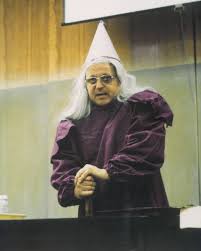
Ron as Paracelsus for his high school Chemistry students

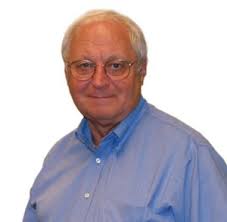
In 1994, Educational Innovations was founded by Ron Perkins, an award winning Chemistry Teacher from Greenwich High School. Along with a number of other awards, Ron was Connecticut’s first recipient of the President’s Award for Teaching.  He was not only a renowned educator, but Ron was also an incredibly creative presenter.  Ron’s passion for science and teaching took him around the globe, giving over 800 teacher workshops for teachers of elementary grades through college!  It was because of his impressive and dynamic presentations that Educational Innovations came to be.

When preparing for his classes and workshops, Ron would hatch ideas, gather materials, and then tinker in his basement.  His demonstrative presentations always generated Oooooooh’s and Aaaaaaaah’s from the people in attendance, whether young students or seasoned teachers.  When the smoke cleared and echoes stopped, teachers would crowd around him and ask where they could find the materials that he used to generate so much science excitement.
Responding to the needs of these other educators, Ron finally put together a two-page flier with the materials, and teachers would send checks or even cash through the mail, and Ron would send their packages.  In the early days, Ron would wait for the mailman to arrive, hoping for an order.  Now almost 20 years later, Educational Innovations supplies teachers, parents, schools, and workshop presenters from every state in the US and over 69 countries around the world!  We are proud to carry forward the spark that ignited interest in science for generations of students.
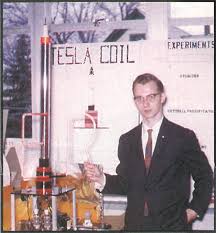
Ron's high school science fair entry


What Makes it Spin?

January 11, 2012

by: Tami O’Connor – Taken From Litetronics

What is a Radiometer?

The radiometer is a light bulb-shaped device containing an object that looks like a weather vane (wings arranged in a circle like spokes of a wheel).  Developed to measure the intensity of radiant energy, or heat, the radiometer will:

  1. Help you understand the principles of energy conversion.
  2. Show how heat and mechanical energy are products of energy conversion.

Most of us don’t realize how important energy is in our lives.  In actuality, every facet of our life involves energy.  One of the reasons we tend to take energy for granted is that it is constantly changing from one form to another.  We call this change conversion.

During this conversion, energy is changing to and from potential and kinetic forms of energy.  Potential energy is the energy stored in matter; kinetic energy is the energy of motion.  In all energy conversions, the useful energy output is less than the energy input.  This is because some energy is used to do work, and some energy is converted to heat.

Sir William Crookes invented the original radiometer in the mid-nineteenth century.  The device was developed to measure the intensity of radiant energy, or heat.

What causes the vanes of the radiometer to spin?  The atmosphere inside a radiometer is a nearly perfect vacuum.  More than 99% of the air has been removed, leaving only thousands of air molecules inside the radiometer compared to the trillions of air molecules in the outside atmosphere.  The “lighter air” inside the radiometer means that the air molecules are able to move about more freely.

The opposing sides of each vane within the radiometer are alternately dark and light in color.  As light (infrared radiation) hits the vanes, the lighter side reflects the light while the dark side absorbs it.  As the dark side absorbs the radiant energy, a difference in temperature develops between the vanes.  The freely moving air molecules bounce off the dark side with a great deal of energy.  As the air molecules “kick” away from the dark side of the vane, they form convection currents and momentum transfer causing the vanes to spin away from the side from which they kicked (that is away from the dark side of the vane).

Stronger light means that more energy will be absorbed on the dark side, and the air molecules will “kick off” faster and with greater force.  Therefore, as the light gets brighter, the vane begins to spin faster and faster.

Fun Activities to Try With Your Radiometer

Sunlight is responsible or many things, including the production of our food.  Plants use energy from the sun to drive the chemical change in the leaves of plants.  Plants act as an energy converter, and they can change the light energy into chemical energy that plants use to grow.

The following experiments also demonstrate an energy conversation.  This conversion begins with light energy that is changed into mechanical energy and heat.  In all energy conversions, the form of energy changes from a more useful type to a less useful type of energy.  Eventually all of the energy that we use will end up as heat, which is the least useful form of energy.

Always remember to be careful while using your radiometer.  Because it is made of glass, it may break if handled roughly or dropped.  If the radiometer does break, contact an adult immediately to clean the broken pieces.

Experiment #1

What light source works best?

Materials: Flashlight, lamp with an incandescent bulb, mirror

Put you radiometer under different light sources including sunlight.  Which light source makes the radiometer spin the fastest?

Experiment #2

What angle works best?

Hold the radiometer in different positions so light strikes it from different angles.  What angle gives the greatest motion to the vanes?

Experiment #3

Does a mirror increase the intensity?

Use a mirror to add additional light to the radiometer.  Does the mirror make the vanes spin faster or slower?  Why do you think that is?  Try holding the mirror at different angles to add light from different directions.  How does that change the rate of motion?

Experiment #4

Does the radiometer need direct sunlight?

Materials: Flashlight, lamp with an incandescent bulb, mirror, various colors of colored cellophane or colored plastic

Your goal is to find out if the radiometer still spins when the light source has to pass through a colored cellophane or colored plastic.  Use the different light sources from Experiment #3, but place the colored cellophane or plastic between the light source and the radiometer so the light has to pass through it.  Do certain colors allow more light though to make the vanes spin faster?  Do the vanes spin faster or slower with the colored cellophane or the colored plastic?

Experiment #5

The radiometer and heat energy.

Materials: Hair dryer

Use a hair dryer to direct a stream of heat toward the radiometer.  Do the vanes turn at all?  And if so, what happens after a few seconds?  How is this energy source (the hair dryer) different than light energy?

Experiment #6

Will wind affect the radiometer?

Materials: fan or drinking straw

Using the drinking straw or fan, blow air at the radiometer.  Can you get it to turn?  Why or why not?

Experiment #7

Your turn… Can you devise an experiment?

It is your turn to be the scientist.  Now that you know about the radiometer, can you devise an experiment using it? Decide what you’re testing for and test your results!

Educational Innovations sells radiometers for $9.95.


Who Knew They Could Be So Dense?

January 3, 2012

by:  Tami O’Connor

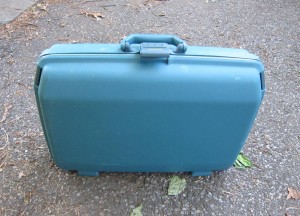
Density is not typically an easy concept for most middle school students and even more difficult for younger students, but it doesn’t need to be.  We all know that D=m/V, but the easiest way I found to explain it to my students was to have them visualize a common dilemma in my home immediately preceding a vacation.  For years, as a poor starving teacher, I only had one suitcase, and it was actually a hand-me-down from my mother.  It was a medium sized Samsonite, hard cased piece of luggage.  When approaching the topic of density in my classroom, down from the attic it came.

My explanation began with an imaginary weeklong summer vacation to a low-key resort.  The class and I would brainstorm the items I needed to pack for my trip.  Generally, the list included items such as a few bathing suits, shorts, t-shirts, a pair of flip flops, some PJs, underwear and a few toiletries.  It was obvious by looking at the size of my suitcase that in addition to my meager belongings, I could have probably also fit one of my students in my bag…  ok, perhaps one of the smaller kids.

I explained that when I closed the suitcase, it was hard to see, simply by looking at it, how heavy it was.  The lesson didn’t stop there.  We now planned my one-week ski vacation to Vermont during the February break.  Once again, my students and I made up my pack list.  The list included a couple of heavy sweaters, long johns, gloves, a hat, boots… as you can imagine, the list went on and on.  The question was, where to put it all.  Of course, since I had only one suitcase, the answer was easy.

I would explain that the night before my winter trips, I could usually be found sitting on top of my very over-stuffed suitcase trying to close the latches!  I was always a little concerned that if the latch broke, my suitcase would explode and my belongings would be everywhere!  That always elicited a round of giggles as my kids visualized that catastrophe!  The interesting point was that once my suitcase was closed and latched, there was no way to determine how heavy it was just by looking at it.  Here it is… density in a suitcase!

The volume or size of my hard-sided suitcase never changed; however, the mass, or all the stuff inside each suitcase I packed was dramatically different.  This is when we started explaining more of the science of density.  The more tightly packed the molecules in an object are, the denser it is.

My next prop included two identical cardboard boxes.  The first had about eight bricks inside and the second was empty.  Without telling my class what to expect, I would ask for a volunteer to lift the box with the bricks.  After a bit of a struggle, the box would slowly rise above the table.  The other students could clearly see that the box was obviously very heavy.  I would then ask the same student to lift the second box.  Without fail, this box was hoisted so high that it almost flew out of the student’s hands!  Once again, we had two objects with basically the same volume but with drastically different masses.

My next question was: suppose my boxes were waterproof?  If I dropped them into the ocean, what would happen?  School aged kids all understand the concept of floating and sinking, so the obvious answer was that the box with the bricks would sink while the empty box would float.  I would explain that the bricks are denser than water, and that is why they sink. The air that filled the lighter box was less dense than the water, however, and therefore it would float.

In the next demonstration, I found two stainless steel spheres from Educational Innovations.  One was small and solid and the other one was much larger and hollow.  I would pass these around the classroom and asked the students to tell me which one had more mass (or was heavier).  Another unanimous answer:  the small, solid sphere was heavier.

Next, I would find another volunteer and blindfold my victim… I mean, my student.  I would then take two identical baskets, paper plates, or small plastic bowls and put each sphere in so they didn’t roll around.  I would ask my student to hold out his or her hands and would then place one plate in each hand and ask which was heavier…  Since both spheres are basically the same mass, the answer did not come as quickly as it did before the mass was spread out along a greater distance.  This was a perfect segue into the next unit on pressure.  But that would have to wait a week or two…

Of course, the observers in class were chomping at the bit to try the blindfold test.  Talk about active learning and a discrepant event!  Now that the class believed that both spheres were the same mass, I pulled out the large glass bowl filled with water, and I would ask my students to predict, based on the fact that we know that both sphere have the same mass, what would happen when I placed each sphere into the water.

This was amazing because, had I asked prior to blindfolding them, every student would have accurately predicted that the small sphere would sink, and the large one would float.  Now, a heated discussion usually ensued.  At this point, the mathematical formula was revealed (D=m/V).  When the mass increases and the volume remains the same, like the example of my luggage or the boxes with the bricks, the density increases.  At the same time, when the mass remains the same but the volume increases (like the small sphere vs. the large one) the density decreases.  Depending on the grade level I was working with. I would substitute simple numbers in the equation to show how changing the mass and volume affected the density.

Now, back to the discussion of floating and sinking spheres… After the explanation of how volume and mass affect density, most, if not all of my students agreed that the small sphere, being very dense, would sink, while the larger, lighter sphere would float.  Another successful seventh grade lesson!


Follow

Get every new post delivered to your Inbox.

Join 42 other followers

%d bloggers like this: