
Cartesian Divers

January 27, 2010

by: Ron Perkins

Cartesian divers are one of the oldest and most interesting toys you can build at home.  While they are easy to construct, there is a lot of science behind the workings of this deceivingly simple toy.  A Cartesian diver is an object whose density changes with pressure.  In fact, most Cartesian divers become denser as pressure is increased.  By constructing a Cartesian diver carefully, it is possible to make a diver that floats in water at atmospheric pressure, and sinks when the pressure is increased.

Water has a density of about 1 gram/ml.  Objects that have a density of less than 1 gram/ml float, while objects with a density greater than 1 gram/ml sink.  When using sealed divers, as pressure is increased, a Cartesian diver’s density might increase from about .8 grams/ml to 1.2 grams/ml.  When this happens, the diver sinks in water.  Cartesian divers often change their density by changing the amount of water they displace (i.e., changing their volume).  When the pressure is increased, the air inside the diver is compressed.  This compressed air takes up less space, and thus displaces less water.  As less water is displaced, the density of the diver appears to increase and the diver sinks.

Making Cartesian Divers

Materials:

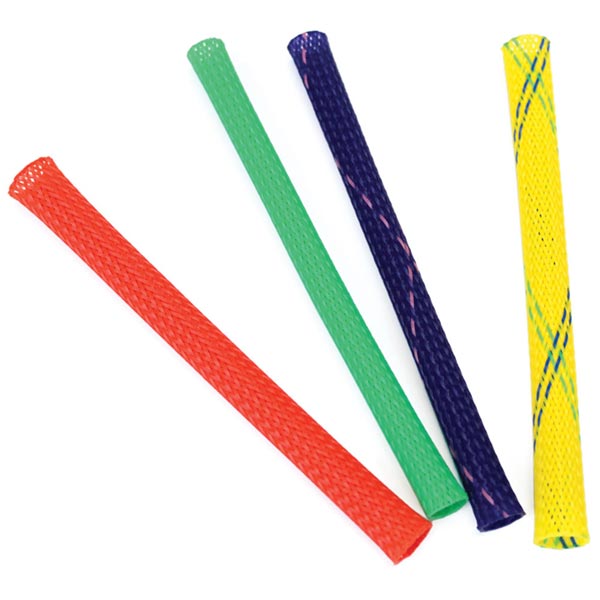
1 Plastic Pipet (PP-222), 1 Ballast Nut (CD-3), Plastic Soda Bottle with Top, Candle, Scissors, Pliers, Water

Optional: Fizz-Keeper Pump Cap (CD-4), Food Coloring, Aluminum Foil, Hot Melt Glue Gun

Instructions

1.  With scissors, snip off all but 2 cm of the neck of the pipet.

2.  Screw one ballast nut onto the remaining 2 cm neck of the pipet.

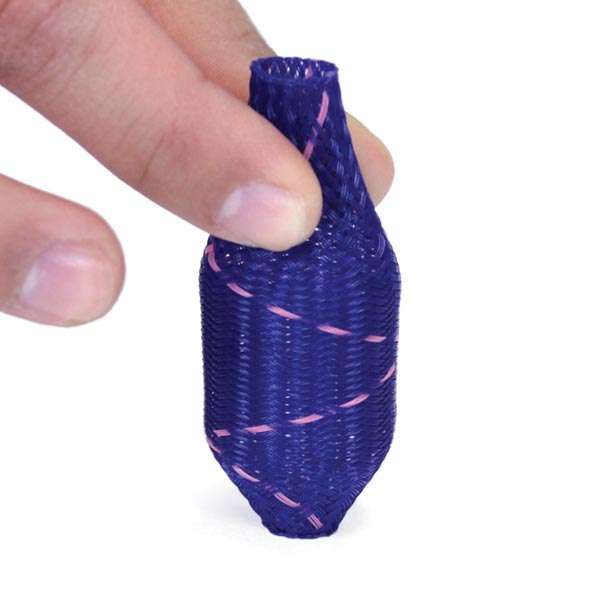
3.  Fill the pipet bulb with colored water.  Note that the bulb must float when placed in a cup of water.  Experiment with different amounts of water, making sure that the bulbs still float.  Bulbs that float higher in a cup of water will make divers that are more difficult to sink.

4.  Your Cartesian diver is ready!  Fill a 1 or 2 liter plastic soda bottle almost to the top with water.  Place your diver in the bottle and screw on the Fizz-Keeper pump cap.  Try squeezing the bottle.  Can you make your diver sink?  Now pump the Fizz-Keeper and watch as your diver sinks right to the bottom.  Can you figure out how to get it back up to the top?

5.  Remove the pump cap, pour out your diver, and try varying its buoyancy.  Try filling it with different amounts of water.  Put it back in the bottle, replace the pump cap and try sinking it again.

6.  When you are satisfied with your divers and would like to make it permanent, you can seal it by sealing the open end of the bulb.  This can be done with any waterproof glue, hot glue, or by melting the plastic stem slightly and squeezing it gently with small pliers.

To seal the bulb by melting, first make sure your bulb floats.  Once it is sealed, its starting buoyancy cannot be changed! Make sure there is no water in the neck by holding it upside down and tapping or squeezing it slightly.  Hold the neck about 1-2 inches above a candle flame until it becomes completely transparent (the change is very subtle).  Immediately remove the neck from above the flame and squeeze the end gently with pliers to seal.  Let cool.  Return your diver to the bottle with clean water and it will last for many years.

There are literally hundreds of experiments you can try!  For instance, try crumpling up a piece of aluminum foil into a small ball.  Place this in your bottle.  See if you can sink it by squeezing the bottle… how about pumping it?  Small packets of soy sauce have also been known to work!

Use more pipets and vary their densities.  Try numbering your divers and see if you can make them sink in order.  Note that your divers are not yet sealed, and so they can be adjusted as many times as you like (colored water will leak out of them until they are sealed).

Educational Innovations carries a full line of Cartesian diver materials, including Bob Becker’s DVD that demonstrates and discusses a plethora of fascinating diver designs.  Bob Becker, an award winning high school chemistry teacher, is a pioneer in the field of Cartesian divers.  This DVD includes DVD-ROM which contains additional resources such as project guides and templates.


Pocket Sound Blaster

January 8, 2010

by: Norman Barstow

Frequency, Wavelength and Pitch:

Sound is a tone you hear as the result of regular, evenly spaced waves of air molecules. The most noticeable difference is that some tones sound higher or lower than others. These differences are caused by variations in spacing between the waves; the closer the waves are, the higher the tone sounds. The spacing of the waves – the distance from the high point of one wave to high point of the next one – is the wavelength.

All sound waves travel at about the same speed in a given medium. So, waves with a longer wavelength don’t arrive (at your ear, for example) as often (frequently) as the shorter waves. This aspect of a sound – how often a wave peak goes by – is called frequency by scientists and engineers.

The word that musicians use for frequency is pitch. The shorter the wavelength is, the higher the frequency, and subsequently the higher the pitch of the sound. In other words, short waves sound high; long waves sound low.

Many instruments produce sound by vibrating a column of air inside a tube, e.g. flute, trumpet, and saxophone.   A sound wave is created by a vibrating object. The actual frequency at which an object will vibrate is determined by a variety of factors including the object’s size, the material the object is made from, and the medium in which the sound wave is vibrating.

Since frequency = speed/wavelength, an alteration in either speed or wavelength will result in an alteration of the natural frequency.

When you blow into the side hole of the Pocket Sound Blaster, (SNG-600) the rubber diaphragm vibrates as air pressure repeatedly increases and then is released.  The vibration then resonates through the chamber and exits through the open end of the tube.

Activity #1:

As you blow into the hole of the Sound Blaster, lightly touch the diaphragm to see whether the sound changes.  Does the pitch get higher or lower? Drummers can change the tension on their drum-heads to change the pitch.

Activity # 2:  Slide Trombone

As you blow into the hole of the Sound Blaster, insert your other hand’s thumb and move it in and out. Notice any change in pitch?  For longer tubes, use a cork on the end of a barbecue skewer or thin wooden dowel to change the column of air and to make your own ‘trombone’.

Activity #3: Length of the tube (column of air)

Use cardboard tubes (toilet paper, paper towels, mailing tubes) of varying lengths to make the Pocket Sound Blaster tube longer. You’ll have to taper the ends of the cardboard tubes to make them fit the outside diameter of the Pocket Sound Blaster.

Shorter is Higher — Longer is Lower:   Change the length of this vibrating column of air by varying the length of a tube.  Because the Pocket Sound Blaster is short, it produces a higher pitch or frequency.  This happens because sound waves can travel, or vibrate, a shorter distance faster than a longer distance.

Activity # 4:

Since the Pocket Sound Blaster tube is approximately 3″ long, make a series of card board tubes in 3 inch increments (3”, 6”, 9”, 12” etc.) to see how this affects the tone.

Activity #5:

The diaphragm of the Pocket Sound Blaster is held on by the plastic ring. Gently remove the ring and explore with other diaphragm material:  wax paper, parchment paper, zip bag plastic, other balloons, latex or Nitrile glove material, etc. What changes do you discover?

Activity #6: Sound Energy

Can the sound from the Pocket Sound Blaster perform work?

  1. Try to blow out a birthday candle with the Pocket Sound Blaster.
  2. Put some confetti or puffed rice cereal in the tube and blow through the side hole. What happens?
  3. Hold the Sound Blaster so the rubber end is upright.  Place some puffed rice on the latex and blow.  Observe the movement of the puffed rice due to the vibration of the surface.

Toroidal Vorticies

January 7, 2010

by: Ellen Lewis

A Toroidal Vortex is whirling air or liquid in the shape of a doughnut.  Vortices are created in nature by many things including dolphins, volcanoes, tornadoes, hurricanes, and whirlpools.  They can be created around the wings of an airplane, in the wake of a boat, or in a rocket blast.  Now you can make Toroidal Vortices in your classroom with the Zero Launcher and the Air Zooka.  Use these products to discuss friction, pressure, the Bernoulli Effect, or the Coanda Effect.

Activity 1: Simple Toroidal Vortices

Create a simple Toroidal Vortex with a droplet of food coloring and a tall glass of water.  Start by holding the dropper about 3 cm above the water’s surface.  Squeeze a single drop of food coloring straight down into the glass.  You will be amazed to see how the friction between the water and the food coloring will create the doughnut shaped rings!

See what happens when you drop the food coloring from different heights above the surface of the water.  How does this affect the size of the ring formed or the speed of the ring as it moves through the water?

When the drop of food coloring moves through the water, there is friction between the food coloring and the water.

The sides of the food coloring droplet get pushed upward as the food coloring continues to fall.

This causes material from the bottom of the droplet to flow to the top, which results in a hole in the middle.  A doughnut or Toroidal Vortex is formed.

This last figure shows a cross sectional picture of the Toroidal Vortex as it moves down through the water.

Activity 2: Fog Rings

Use the Zero Launcher to create Toroidal Vortices with fog fluid.

  1. Turn the Zero Launcher on, this will power the heating element needed to create the fog. The heating element vaporizes the glycerin, which condenses in the air.
  2. Push the pump button to fill the fog chamber with fog.
  3. Pull the firing lever back.  Releasing the firing lever will allow the plunger to strike the diaphragm and produce a fast moving pulse of air.  Once the fog passes through the opening of the chamber, the outside stationary air slows down the airflow of the fog, similar to how the water slowed down the droplet in Activity 1.
What happens when you move the launcher forward while you launch the fog rings?

What happens when you move the launcher sideways or up and down while you launch the fog rings?

What happens to the fog rings if you try to fan them?

Activity 3: Blow ‘Em Away

1. Grip the handle on the Air Zooka and aim at a target.

2. Grip the elastic air launcher with the other hand. Fully extend your arm and pull straight back (do not over pull).

3. Release the elastic air launcher to launch a powerful yet harmless ball of air!

4. Feel the Toroidal Vortices created by the Air Zooka!

Use the Air Zooka to blow out the birthday candles on your next birthday cake!

Use the Air Zooka instead of a softball to knock down Styrofoam cups in the carnival classic game with the cups stacked in a pyramid.  Visit Educational Innovations website www.teachersource.com to find Super! Wow! Neat! products to inspire your students!


The Energy Ball

December 30, 2009

by:  Sarah Brandt

This uniquely entertaining ball is a fun way to demonstrate open and closed circuits, as well for prompting discussions on conductivity. The following activities are perfect to use in elementary and middle school grades first exploring electricity and circuits.

When both sensors on the ball are touched and a complete circuit is formed, the ball flashes a red light and buzzes.

What makes the energy ball work?

Inside the energy ball is a simple circuit that is completely self-contained. By touching both sensors, the circuit is completed by electrons flowing through your body or another conductive material such as a paper clip. Materials that activate the energy ball are good conductors, meaning they pass electrons easily. Materials that do not activate the energy ball are poor conductors (or insulators), meaning they do not pass electrons easily. Your students will enjoy finding different ways to activate the ball:

One Student: Simply hold the ball so that both sensors are touched or, press one sensor with your hand and the other with a paperclip. Try experimenting with other materials (cardboard, plastic, metal) to see which will activate the ball.

Multiple Students: Using two students, have each student touch a sensor, and then hold hands with one another. See how many students can hold hands and still keep the energy ball buzzing. This is an easy way to demonstrate the difference between open and closed circuits – designate one student to be the “switch.” If the switch releases one or both of the hands they’re holding, the ball will stop flashing, representing an open circuit. Holding hands again will resume flashing, and the circuit will be closed.

An Entire Class: For a fun teaching game, try playing a variation of “Duck, Duck, Goose,” with the energy ball. First, form a circle of hands with the energy ball between two students.  One student should be outside the circle, who will be “it.” This student should then go around the circle, pointing to each person in turn and saying either “closed” or “open.” Once a person has been designated “open,” he or she should break the circuit and try to make it around the circle and complete the circuit before the person who was “it”.

Educational Innovations sells the Energy Ball (SS-30) for $3.95.


Energy

December 30, 2009

by: Tami O’Connor

One of the units I enjoyed most as a middle school teacher was the section on energy.  The many awesome hands-on experiments generated such a series of oohs and aahs that it made my already-enjoyable days even more enjoyable!  One of my favorites was a lesson that dealt with the Law of Conservation of Energy.  A consequence of this law is that energy cannot be created, nor can it be destroyed.  (The students would have already explored potential and kinetic energy before the following activity.)

I initiated this lesson reviewing what happens with energy in a closed system.  The students clearly remembered comparing the amount of potential energy to kinetic energy using the example that the height of a roller coaster’s first hill is always greater than the combined heights of the remaining hills.  They were generally able to explain the transfer of energy including heat energy and sound energy in the overall system.

I would then take out a normal playground ball and a meter stick and ask the the students to predict the height the ball would bounce if dropped from a meter off the ground.  Most students accurately predicted that the ball would not bounce as high as the height at which it was initially dropped.  Of course, we would then test our hypothesis.  A few students in each class would always insist that the ball could bounce higher than the height at which it was dropped, so I would invite them to show me how it could happen.  Inevitably, the student would add energy to the system by throwing the ball down to the ground rather than simply dropping it.  This was a great opportunity for discussion and was a topic that we would tap into later in the lesson.

I would then pull out my complete collection of balls that ranged from the hard, less bouncy baseballs to the rubber and highly bouncy super balls and have the students explore on their own.  Though there were noticeable differences in the elasticity of the  balls in my collection, none of them bounced higher than the height at which they were dropped.

My next demonstration utilized a racquetball that I had cut in half… well, actually a little less than half.  I would again ask my students to predict how high the  half-ball would bounce.  The answers varied, but by this time, not one student predicted that it would bounce higher than its drop point.  As before, we tested their hypotheses before moving on to the next step.

Because the racquetball is very flexible, I was able to turn the half-ball inside out thus storing elastic potential energy.  Once again, I asked the students to predict what would happen when I dropped the ball.  Based on their recent experience, they all answered that the half-ball would bounce lower than its drop point.  Of course, because I stored elastic potential energy in this system, once the half-ball hit the ground, it popped right side out and was propelled significantly higher than the point at which it was dropped.  Talk about a discrepant event!

Thank goodness Educational Innovations sells Dropper Poppers.  This product eliminates the time and difficulty of cutting racquetballs in half, not to mention the expense of purchasing racquetballs really intended for use in the court!

Dropper Popper Activities

When this small, “half-ball” is turned inside out and then dropped onto a hard, flat surface, it releases the stored energy and “jumps” higher than the point from which it was released.

EXPLANATION
• Elastic potential energy is energy that is stored as a result of deformation of an elastic object such as a spring or a rubber band.
• Gravitational potential energy is energy that is stored as a result of an object’s position above the ground.

ACTIVITY #1 How High Will a Ball Bounce
Showing your students a regular ball such as a small super ball, basketball, or ping pong ball, survey the class to determine the height at which they predict the ball will bounce if dropped without additional energy. You may be surprised to learn that some students will predict that the ball will bounce higher than the point from which you drop it.

Drop the ball. Students will discover that the ball will never reach the height from which you dropped it. The Law of Conservation of Energy states that energy cannot be created nor destroyed; it can only be transferred as alternate forms of energy. The energy that initially went into the system was transferred out as sound energy and heat energy. The ball will never bounce higher than the initial drop point because the energy that comes out of a system can never exceed the energy that goes in.

Explain to your students that the ball’s energy was stored due to its position above the ground. Because of the force due to gravity, the ball falls down as it is attracted to the earth.

ACTIVITY #2 The Dropper Popper
Show your students the Dropper Popper (POP-100), and ask them to predict the height at which the popper will bounce if you drop it straight down. Drop the popper without turning it inside out and observe the height at which it returns.

Turn the Dropper Popper inside out and explain that by doing work on the popper you are storing energy in it. Have the class predict again the return height of the popper after it is dropped. Drop the popper with the “bulge” pointing upward. When the popper hits the ground the stored elastic energy will be released and will cause the popper to bounce higher than the point from which it was dropped.

ACTIVITY #3 Ping-Pong Ball – Be sure all students wear protective eye wear.
This activity is truly best when each student has his/her own Dropper Popper and a Ping-Pong Ball, (PNG-100). Have the students store energy in the popper by turning it inside out. Then place the ping-pong ball in the “bowl” of the popper. Drop the popper onto a hard surface in such a way that the ping-pong ball remains above the popper and inside of its “groove”.
• Have students estimate how high the ball travels.
• Change the height at which you drop the popper and determine if the height the ping-pong ball travels is based more on gravitational or elastic potential energy.

An additional demonstration of the Law of Conservation of Momentum and Energy can be shown using the AstroBlaster (SS-150).  This device has several balls threaded on a plastic shaft.  When dropped straight downward onto a hard surface, the top ball can rebound to a height equal to five times the original drop!


The Amazing Drinking Bird

December 1, 2009

by Tami O’Connor

Invented in 1945 by Miles Sullivan, the “drinking bird” has been a favorite of science teachers in every classroom from kindergarten through college. This amazing device is made of two glass bulbs (one representing the head and the other representing the body) joined by a glass tube (representing the neck).  Between the two bulbs, attached to the glass tube, is a metal fulcrum upon which the bird pivots.  The air has been removed from this closed device, and the bottom ball is filled with a colored liquid that has a high vapor pressure (methylene chloride). The rest of the bird’s body and head is filled with the vapor form of methylene chloride.

The demonstration is set up such that a glass, filled to the top with water, is placed in front of the drinking bird. The glass should be the same height as the pivot point of the bird. The bird’s head should be moistened and then the bird should be given a gentle push to begin it oscillating along the pivot point.  Eventually, the bird appears to drink repeatedly, on its own.  So, how does that happen??

The top bulb (head) of the drinking bird is covered with felt. After the felt is moistened with water and the water begins to evaporate, the temperature in the head decreases. This drop in temperature causes some of the vapor inside the head to condense, causing the pressure inside the birds head to decrease. The decrease in pressure in the top bulb causes the liquid from the bottom to be forced upward from the base. As the liquid flows into the top bulb, the bird’s center of gravity moves upward causing the bird to tip forward, dipping its beak into the glass of water.

After the bird tips over and is horizontal, the bottom portion of the glass tube is no longer in the liquid. The glass tube, now 90 degrees to the surface allows the vapor from the bottom to travel to the top until the pressure is equalized.  At the same time, liquid in the column flows back to the bottom bulb. The weight of the bird is now primarily below the pivot point, so the bird returns to a vertical position.

The liquid in the bottom bulb is now exposed to the temperature of the ambient air, which is slightly higher than that of the bird’s head. This cycle continues as long as there is enough water in the glass to moisten the felt on the bird’s head. This cycle gives the appearance of a bird drinking!

SUGGESTED CLASSROOM ACTIVITIES

I) Classroom Discussion

Q. Is this an example of perpetual motion?

A. No. The cycle repeats itself only as long as the water evaporates from the head

Q. What is needed in order for the Drinking Bird to work?

A. A difference in temperature between the head and body.

II) Student Challenges

  1. Observe the operation of the Drinking Bird and explain how it works.
  2. Discover a way to make the Drinking Bird cycle faster.
  3. Predict what will happen if a fan blows air toward the Drinking Bird. Does it make a difference which direction the air blows?
  4. Predict the result of using warmer or cooler water in the glass.
  5. How long will the bird cycle without needing a refill of the water in the open container? Can you find a way of causing the bird to cycle longer?
  6. Is there a difference in the cycle rate on a humid day vs. a dry day? Can the bird be used to determine the relative humidity in the air?
  7. Predict the result of placing a small inverted aquarium over the bird. Does this cause the bird to cycle more or less? (Note: as soon as the water in this closed system reaches its vapor pressure, water from the felt can no longer evaporate and the bird stops.)
  8. Can you attach a thread to the bird so that it does useful work, e.g. lifting a small paper clip?

Chemistry of UV Detecting Beads

November 13, 2009

ronby: Ron Perkins

UV-sensitive beads contain pigments that change color when exposed to ultraviolet light from the sun or certain other UV sources. The electromagnetic radiation needed to affect change is between 360 and 300 nm in wavelength. This includes the high-energy part of UV Type A (400-320 nm) and the low energy part of UV Type B (320-280 nm). Long wave fluorescent type black lights work well; incandescent black lights and UV-C lamps will not change the color of the beads.

The dye molecules consist of two large, planar, conjugated systems that are orthogonal to one another. No resonance occurs between two orthogonal parts of a molecule. Imagine two planes at right angles to one another, connected by a carbon atom. When high energyuv651 UV light excites the central carbon atom, the two smaller planar conjugated parts form one large conjugated planar molecule. Initially neither of the two planar conjugated parts of the molecule is large enough to absorb visible light and the dye remains colorless. When excited with UV radiation, the resulting larger planar conjugated molecule absorbs certain wavelengths of visible light resulting in a color. The longer is the conjugated chain; the longer the wavelength of light absorbed by the molecule. By changing the size of the two conjugated sections of the molecule, different dye colors can be produced. Heat from the surroundings provides the activation energy needed to return the planar form of the molecule back to its lower energy orthogonal colorless structure.

Although UV light is needed to excite the molecule to form the high-energy planar structure, heat from the surroundings provides the activation energy to change the molecule back to its colorless structure. If colored beads are placed in liquid nitrogen, they will not have enough activation energy to return to the colorless form.

The UV detecting beads remain one of the least expensive qualitative UV detectors available today. They cycle back and forth thousands of times.


Compressed Air as a Force

July 31, 2009

Normby: Norman Barstow

When the National Research Council produced the National Science Standards in 1995, they did so without including sets of lesson plans nor did they design them as part of a standard curriculum package. They were written to be used as goals for our students’ achievement in science.

In my classroom I always used the National Standards when designing my lessons, and they were always clearly represented in the objectives I set for my students. I have found that the topics of Force and Motion, as well as Air, (as part of a weather unit), can be easily taught using balloons to demonstrate the concepts of each. I have designed two different lesson activities that can be used to meet the following standards.

National Science Standards
Content Standards: K-4
Physical Science; Content Standards

  • An object’s motion can be described by tracing and measuring its position over time.
  • The position and motion of objects can be changed by pulling or pushing. The size of the change is related to the strength of the push or pull.

National Science Standards
Content Standards: 5-8

  • The motion of an object can be described by its position, direction of motion and speed.
  • An object that is not being subjected to a force will continue to move at a constant speed in a straight line.
  • If more than one force acts on an object along a straight line, then the forces will reinforce or cancel one another, depending on the their direction and magnitude. Unbalanced forces will cause changes in the speed or direction of an object’s motion.
  • Energy is transferred in many ways.

Balloon Rockets
In a recent workshop I attended, which presented a module on Air and Weather, ‘Balloon Rockets’ was an activity used to show that compressed air can exert pressure to propel a balloon rocket.

The activity used a straw threaded through fishing line, which was stretched across the room. A ziplock bag was then attached to the straw, and the inflated oblong balloons were launched by placing them into the open bag. The force produced by the balloon propelled the straw along the fishing line.

I noticed that the balloons tended to make the bag move from side to side, thus decreasing the distance traveled. We tried the activity again using balloons directly attached to the straw with masking tape. The oblong balloon traveled much farther than the ziplock bag attempt. Next, I introduced the Educational Innovations Rocket Balloons. BalloonOnALineWhat a difference, both in distance traveled and speed. The Rocket Balloons release the compressed air steadily from the opening of the balloon to the weighted tip thereby pushing the straw farther along the fishing line.

Balloon powered car

Another recent discovery I made in my basement was a compressed air (balloon powered) car that I saved from an NSTA workshop I had once attended. The ‘car’ was built with a piece of cardboard as the frame and an axle system made using a wooden skewer inside a drinking straw. The ‘wheels’ were bottle caps and the ‘engine’ was a straw with a balloon attached.

BalloonPoweredCar

While the oblong and/or round balloons worked fine, I wanted to try the EI Rocket Balloon. I had to modify the ‘car’ to account for the increased length and mass of theBalloonPoweredCar2 rocket balloon. The new chassis was now 4 X 14 inches, and I moved the wheels accordingly for this ‘super sized’ car. Again, the difference increased significantly in both distance and speed.

In addition to meeting the above National Standards, these are perfect experiments for elementary and middle school students on manipulating variables and testing hypotheses using the scientific method.


High School Density

July 22, 2009

ronby: Ron Perkins

Whether teaching general science, chemistry or physics, one of the first experiments I assigned was to determine the density of a metal using a set of different sized cylinders of aluminum in a tray.

Each Student:

  • Determined both the mass and volume of a single assigned sample.
  • Recorded their data point on a large classroom Mass vs. Volume Graph.
  • Participated in a class discussion on: determining volume by different methods; drawing a straight line through the data points (including the origin); and calculating the slope of the line (rise over run)

Density Graph-sample

Ron’s suggestions:den122
1. The set of aluminum cylinders (DEN-102) or PVC (DEN-120) are ideal beginning sets. The brass set (DEN-110) is interesting as one can determine the percentage of brass and zinc from the density using a CRC Handbook. The Polypropylene set (DEN-132) is interesting because the specimens float.

2. The Density Mystery Set (DEN-202) uses the element of surprise to teach students to trust their data. The set is made of two different black polymers, each with its own density. When the data is plotted, two different straight lines are produced, each with its own slope or density. Typically students will assume that the material is all the same and start questioning their own measurements. About half of the samples sink in salt water and half float

den2203. Our most popular set provides samples of 12 different substances (DEN-212). Also popular are the cubes of 6 metals (DEN-220). Once students have mastered mass and volume measurements, they find it interesting to be able to identify a substance by determining its density.

Advantages of using our Density Kits:

  • Students learn that the density depends upon the ratio of mass to volume and not upon size of the sample.
  • Students observe that some methods for determining volume are more accurate than others.
  • Students discover that the slope of the “best” straight line usually gives a more accurate density value than calculating from a single piece of data.
  • The teacher can immediately tell from the data points if a student needs help in measuring.
  • The teacher can quickly see if all of the samples have been returned at the end of class.

The Power of Steam

May 28, 2009

tamiby: Tami O’Connor

Although Robert Fulton is usually remembered as the inventor of the steamboat, it was actually John Fitch who built the first successful steamboat in 1787. Unfortunately, John Fitch ran into financial difficulties which opened the door for Robert Fulton to design and test the Clermont, which was the first commercially successful steamboat, in 1807. Since that time, there have been many improvements on the initial design, but the science behind the steamboat engine is fascinating.

Educational Innovations carries Putt-Putt Steam Boats that are wonderful reproduction toys,sb100 which can be used to teach many scientific principles. The science behind how they work is rather complex and often disputed. We would be delighted to hear input from our teachers.

How Do They Work?

One theory is that a heat source (small candle, or cooking oil and wick) heats the water in the boiling chamber creating a brief burst of steam that is expelled through the pipes in the rear of the boat. The force of the expanding gas (steam) pushes the boat forward. Since there is a limited amount of water in the chamber to start with, the exit of the gas creates an area of lower pressure in the boiling chamber. This allows the atmospheric pressure that is pressing down on the water to force more water into the chamber, allowing it in turn to be heated to boiling, and repeating the process again and again until the fuel is exhausted.

Suggested Activities Note: Use caution! The boat will get hot.

Run your Putt-Putt boat in a small pool or washtub.

  • Have students predict how many times around washtub the boat will travel using just one candle or the amount of time each trip will take.
  • Have your students calculate the average speed of the boat by measuring the distance around the test chamber, and timing each revolution.
  • Have students determine if the speed of the boat changes as the fuel is consumed? Does it move more quickly at the beginning, middle or end of the life of the candle? Other variables could include adding additional weight to your steamboat or changing the temperature of the water you boat travels through. Ask students to brainstorm additional variables, which could potentially affect the speed of the boat through the liquid.
  • Use alternate fuels in your boat. Cooking oil and a scrap of cotton fabric works well. As do small wood shavings. Does the type of fuel affect the speed at which the boat travels? Do some fuels make the boat go further? Go faster? Both? Neither? Make a graph of fuel type, vs. speed and distance.
  • For younger students, simply use two different boats to compare variables. Have the boats race each other changing only one variable at a time.

There are a number of websites that give instructions on how to build your own steamboat. This is an excellent idea for a science fair project!

A Note on Conservation

Perhaps we should have called this section “A note on CANservation”. Take a close look at our boats – you will discover that they are made from metal stamped out of a wide variety of cans and containers (some will be misprinted paint cans, others holiday gift tins, still others can be very hard to figure out). This is a wonderful example of how materials that might have had to be re-melted or even end up in landfills can be used to make products that are fun and interesting.